

I had planned to talk about some DVD purchases, so why not. It’s been a couple of weeks since I bought this one, and I’m sure mentioning it will have most people stifling yawns, but that’s just tough! It has to rate a mention: Orson Welles’ 1952 adaptation of Othello.
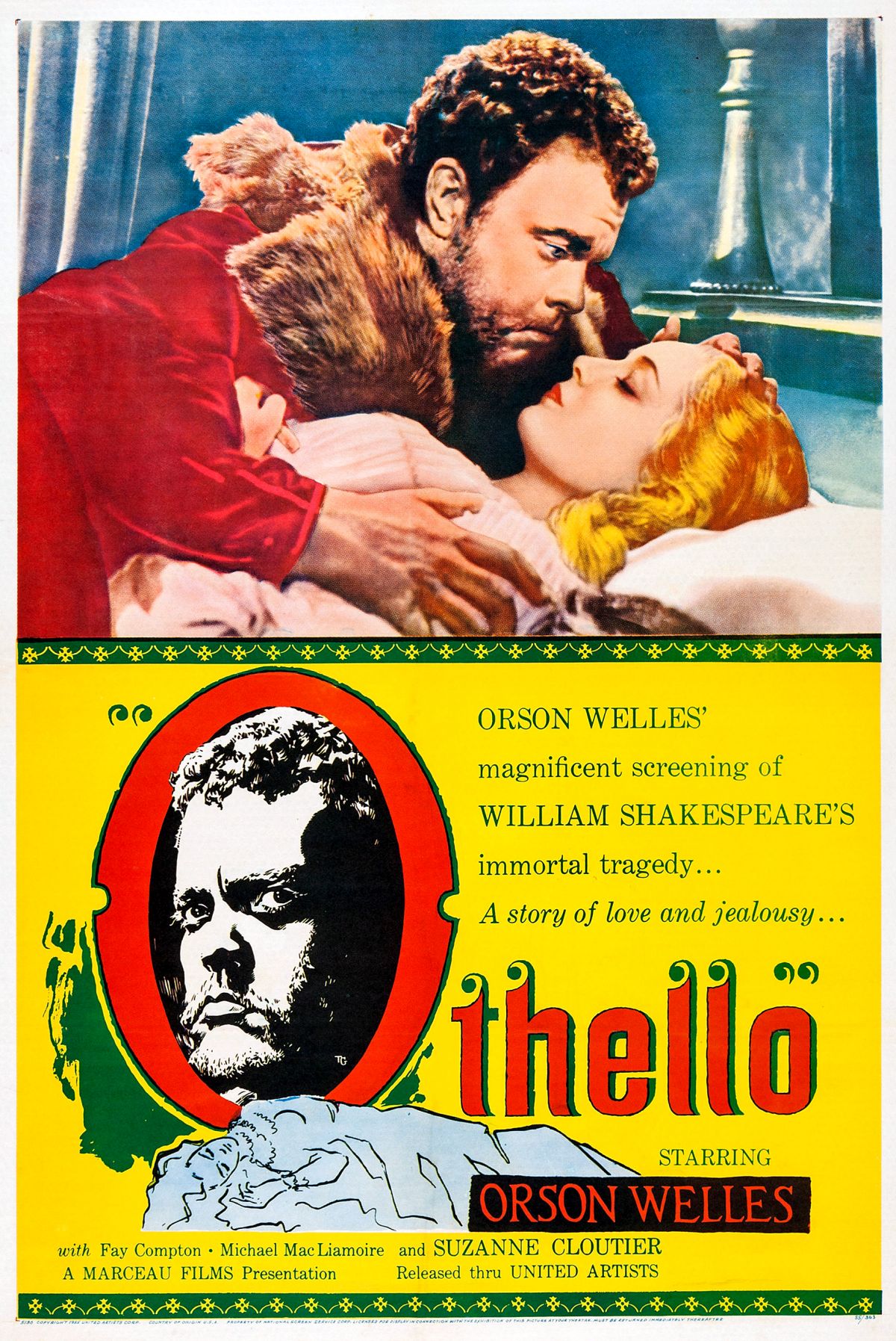
Out of the ‘official’ Welles directorial canon (all twelve of ’em), the ones I’d never seen were Chimes at Midnight, scattered clips aside, Immortal Story, and Othello. The latter’s the most ironic, as it’s my second-favourite Shakespeare play. (My favourite is Hamlet, unoriginally enough.)
 Alas, this recent UK DVD release has some problems. It is taken from a 1992 restoration overseen by Welles’ daughter, Beatrice, who owns the film, and is far from the definitive version it claims to be.
The fact that the digital restoration work is eleven years old shows a bit—there are occasional moments of subtle but clear-cut jerkiness that simply wouldn’t be evident if it were done today. It’s a minor niggle; the actual clean-up work on the print largely results in a very clear and sharp picture.
The sound is also problematic. The nature of the film’s original production is worth noting here: it was made over a period of almost four years in several countries, funds permitting. The different locations are present within single scenes; in other words, the closeup might be in Country A, the crane shot in Country B, the middle shot in Country C. How on earth Welles managed to disguise this, very convincingly, boggles the mind!
Anyway, partly as a result of this, the sound is completely dubbed, and… well, how can you dub Shakespeare? Any actor needs to feel a certain resonance in the words he or she is delivering to do it well. This is particularly true of Shakespeare (or any poetic writing done in blank verse, for that matter). Consequently, the dialogue was frequently out of sync, as the actors presumably (and quite rightly) concentrated more on performance than on matching the words to the lips. In restoring the film, the dialogue has therefore been digitally modified—sometimes compressed or expanded, to quote one of the technicians—so that the sync is more accurate.
I have serious reservations about this. It seems to me this could be considered a violation of the performances that might achieve a more natural appearance overall, but at the cost of losing some of the truth of the original print. The musical score has also been re-recorded and the entire soundtrack converted to stereo… and I’m unsure about that, too. If a film’s made in mono, I think it ought to stay that way. (This issue is similar to that surrounding colourisation, really.)
Still, for all that, I was glad to see it. In a sense, the important draw of the film is in the imagery and atmosphere Welles evokes, and on that level, it’s a masterwork. The lack of budget shows on occasion (i.e. closeup shots of canons firing, crowd scenes trying to look bigger than they really are), but on the whole it’s a wonder. The man was a genius, literally forced for much of his career to make something out of almost nothing and succeeding beyond reason. Taking the lead role, Welles himself is a marvellous Othello, managing to look believably ethnic with no more than slightly darkened skin, and bringing to the part a sense of absolute conviction. The opening funeral march is exceptional and haunting; the artistry throughout more than compensates for the flaws in evidence.

I’d like to see a true definitive version, perhaps a more up-to-date and carefully considered restoration, but that’s unlikely. It doesn’t matter, though. This is a film you must see, whether you like Orson Welles or whether you like the original play and wish to experience the greatest of its screen adaptations.
Next up: Lord of the Rings, maybe. Wow, I finally saw it!